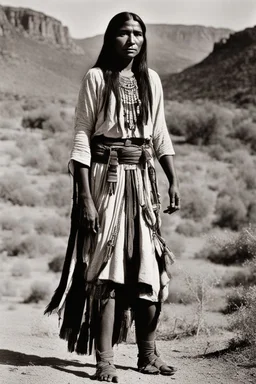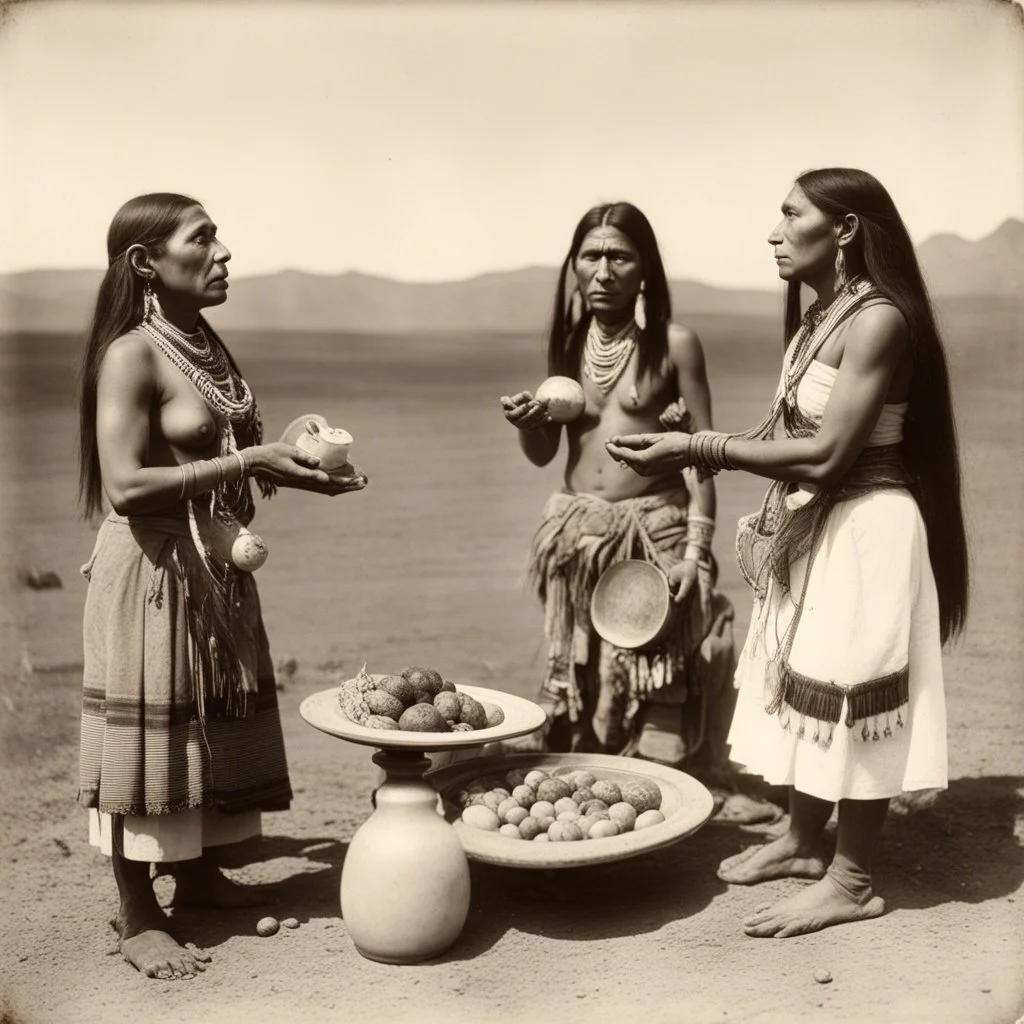
Placeholder: American Indian women offering some alien beings some food and water c.1880's American Indian women offering some alien beings some food and water c.1880's

@generalpha

Prompt

American Indian women offering some alien beings some food and water c.1880's

2 years ago

Generate Similar

Explore Similar

Model

SSD-1B

Guidance Scale

7

Dimensions

1024 × 1024

Similar
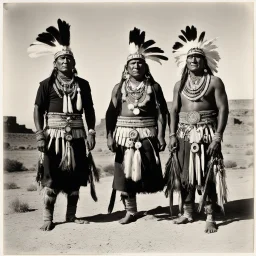
The photograph depicts three Navajo men in ceremonial dress, representing figures from Navajo mythology. The figures are identified in the caption as Tonenili, Tobadzischini, and Nayenezgani. The image is part of Curtis's multi-volume work, The North American Indian, which aimed to document Native American tribes.
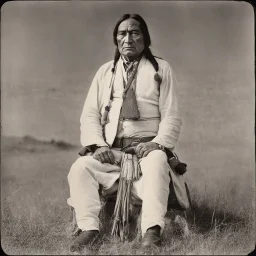
Sitting Bull / D.F. Barry, photographer, Bismarck, D.T.
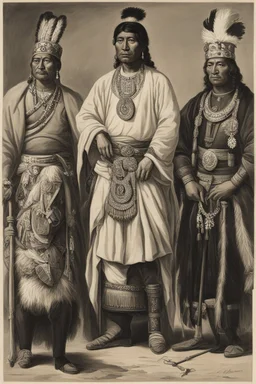
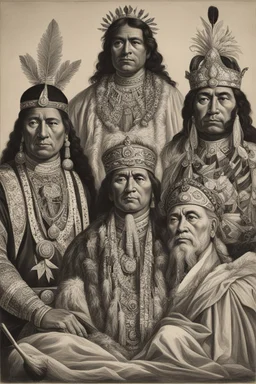
From left to right, from Portraits of Four Indian Kings of Canada by John Simon: Etow Oh Koam, King of the River Nation; a Ga Yeath Pieth Tow, King of the Maquas; Tee Yee Neen Ho Ga Row, Emperour of the Six Nations; Ho Nee Yeath Taw No Row, King of the Generethgarich, via Wikimedia Commons
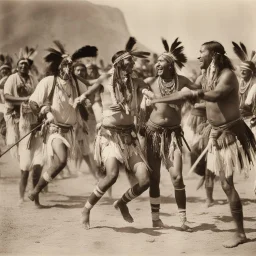
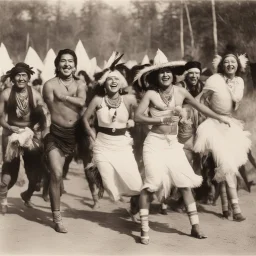
Photograph of happy native Indians dancing with paints on their faces (1843) from the Edward S. Curtis Collection
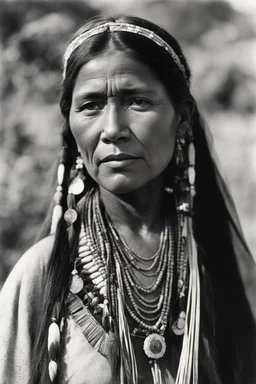
a Native American tribe, possibly the Tolkepayas (Western Yavapai); they captured and enslaved her and her sister and later sold them to the Mohave people. After several years with the Mohave, during which her sister died of hunger, she returned to American society, five years after being carried off. In subsequent years, the tale of Oatman came to be retold with dramatic license in the press, in her own "memoir" and speeches, novels, plays, movies and poetry.
Photograph of happy native Indians dancing with Marilyn Monroe on their faces (1843) from the Edward S. Curtis Collection
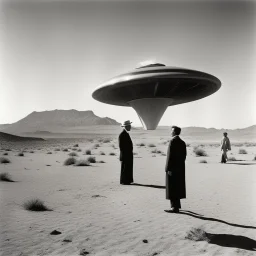
Archival photograph of aliens landing at Area 51 and meeting Orson Welles in jaunty desert garb
a Native American tribe, possibly the Tolkepayas (Western Yavapai); they captured and enslaved her and her sister and later sold them to the Mohave people. After several years with the Mohave, during which her sister died of hunger, she returned to American society, five years after being carried off. In subsequent years, the tale of Oatman came to be retold with dramatic license in the press, in her own "memoir" and speeches, novels, plays, movies and poetry.
Sitting Bull / D.F. Barry, photographer, Bismarck, D.T.
The painting of Little gazelle (Tatanka-cikala)'s face and body among the plains tribes was said to be a form of mental conditioning. the Warrior paint herself with personal protective designs and colors beforehethey engaged in battle with an enemy.
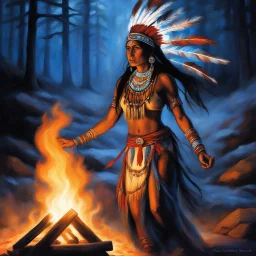
by the flickering light of a campfire, stands a half-naked native Indian shaman woman covered with sacred paintings. Her presence is a dance of shadows and light, her movements like poetry in motion as she weaves the mystic signs with her hands.

© 2026 Stablecog, Inc.