
@generalpha
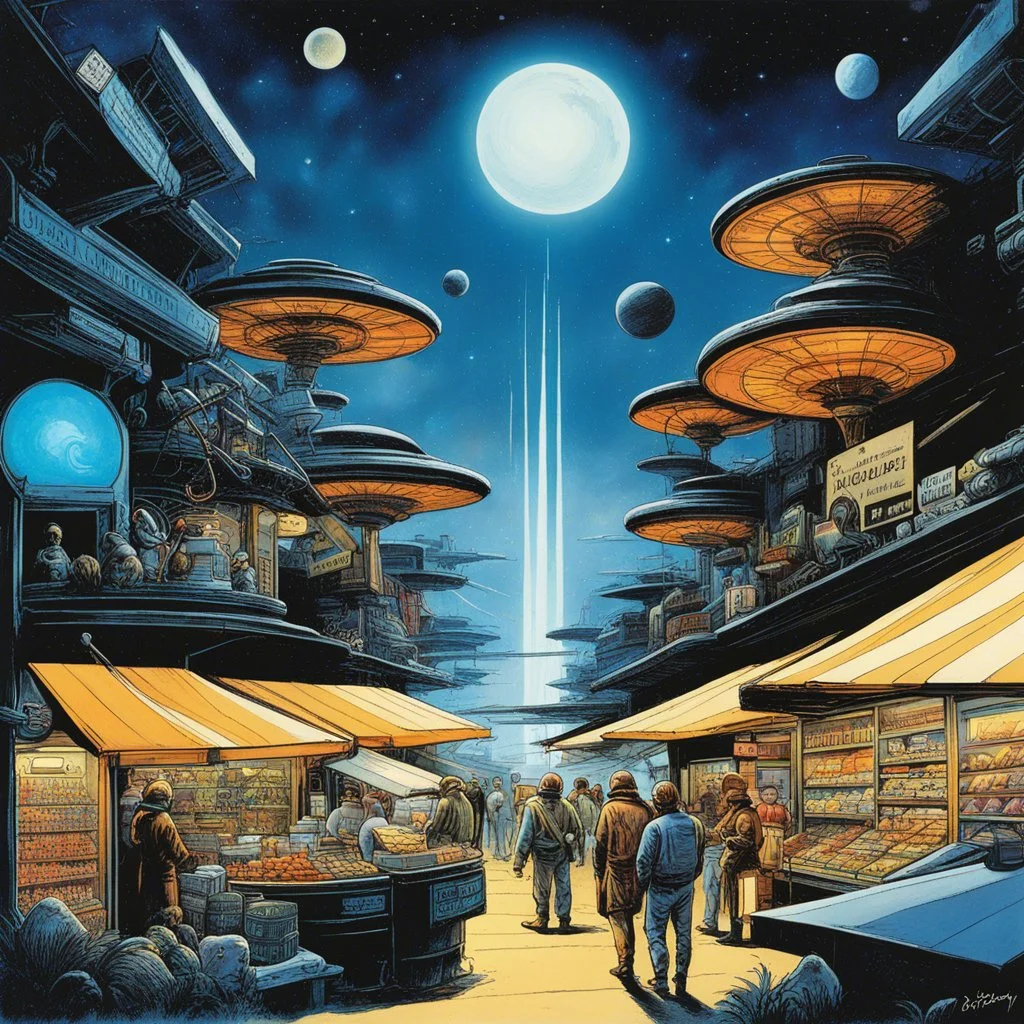
Prompt
the illustration of an alien market -- signed by Gene Roddenberry
distorted image, malformed body, malformed fingers
1 year ago
Model
SSD-1B
Guidance Scale
7
Dimensions
1024 × 1024
Similar
![[art by Masamune Shirow] In a realm of cosmic wonder, Jesus explores canyon holes with geometric carvings, encountering microscopic water bears and a punk band with spiky hair. Inside a unique spaceship, he witnesses a planet in chaos, with running bison and falling buildings amidst the fiery skyline of New York. The surreal scene intertwines skin follicles, mannequins, and seaweed mattresses in a dance of existence, revealing the essence of creation and transformation. Amidst the mysteries of t](https://img.stablecog.com/insecure/256w/aHR0cHM6Ly9iLnN0YWJsZWNvZy5jb20vZmE2YTc1ZmMtNzUxMy00ZWY0LWIyNDAtYjY0OTdlZGE0NzZjLmpwZWc.webp)
![[art by Bruce Pennington]](https://img.stablecog.com/insecure/256w/aHR0cHM6Ly9iLnN0YWJsZWNvZy5jb20vZWNlOTg4MjgtYTBkZC00M2Y3LTkyMjUtZTIzNDY5MmZiMTM4LmpwZWc.webp)
![[illustration by Jean-Claude Mézières (1967)] Alien Markets, where the bustling stalls overflow with exotic goods and creatures from distant galaxies. Here, the air is filled with the scent of sizzling plasma fruits, a delicacy coveted by the tentacled Trilaxians. Vendors peddle shimmering energy crystals that pulse with unknown power, sought after by the mysterious beings of the Nebula Cluster. Tools crafted from the rarest metals mined from the asteroid belts are bartered for by the mechanical](https://img.stablecog.com/insecure/256w/aHR0cHM6Ly9iLnN0YWJsZWNvZy5jb20vMjRkNmZmOGItMWI2Yi00MGViLWE4YTktNDIxZTQ1MjBkNGM4LmpwZWc.webp)
![[art by Otto Dix] space pirates land on a rebel moon to hide their contraband cargo picture is in a retro futurist style / Retrofuturism: Where Yesterday’s Tomorrow Still Shines Retrofuturism is a whimsical collision of past and future—a design philosophy that resurrects the utopian tech fantasies of bygone eras (think 1920s–1970s) and splashes them across sci-fi landscapes.](https://img.stablecog.com/insecure/256w/aHR0cHM6Ly9iLnN0YWJsZWNvZy5jb20vN2YzMzNhNDEtNDNlMi00NGE1LThkOWYtMTI4Y2I3ZWE4MmZmLmpwZWc.webp)
![[art of John Blanche, frank frazetta, Heath Robinson and Norman Rockwell] The starship drifted through the void, its hull a lattice of blackened chrome and crimson light, pulsating. Within its core, the engine hummed with an energetic rhythm, a mechanical heartbeat defying the silence of the abyss.Cloaked in an enigmatic aura, the pilot sat in solitude, her face half-hidden behind a mask of iridescent crystal. She was a navigator of the forgotten, charting pathways through dimensions no human mi](https://img.stablecog.com/insecure/256w/aHR0cHM6Ly9iLnN0YWJsZWNvZy5jb20vNzMwODdjZjQtZjU2OS00YWJkLWIwOGMtMjliMTAyOWMzYTgyLmpwZWc.webp)
![[art by Bruce Pennington]](https://img.stablecog.com/insecure/256w/aHR0cHM6Ly9iLnN0YWJsZWNvZy5jb20vZGZlMTAzYjQtOTU1Yi00NzMwLWJhMWMtNjc5YjBiODA1ZjliLmpwZWc.webp)
![[illustration by Jean-Claude Mézières (1967)] Alien Markets, where the bustling stalls overflow with exotic goods and creatures from distant galaxies. Here, the air is filled with the scent of sizzling plasma fruits, a delicacy coveted by the tentacled Trilaxians. Vendors peddle shimmering energy crystals that pulse with unknown power, sought after by the mysterious beings of the Nebula Cluster. Tools crafted from the rarest metals mined from the asteroid belts are bartered for by the mechanical](https://img.stablecog.com/insecure/256w/aHR0cHM6Ly9iLnN0YWJsZWNvZy5jb20vZWFjMjgxNzMtZTRjOC00MjQ3LWE5ODQtOTcyZTQwMDAwMDMzLmpwZWc.webp)
@generalpha
Prompt
1 year ago
Model
SSD-1B
Guidance Scale
7
Dimensions
1024 × 1024
Similar
© 2026 Stablecog, Inc.