@generalpha
Prompt
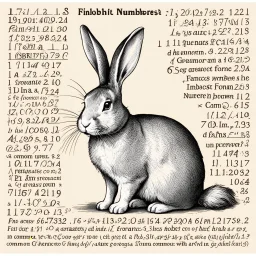
The rabbit (or Fibonacci) numbers form a sequence (a(1) = 1), 1, 2, 3, 5, 8,13,21,34,...,in which a(n)+2 =a(n+1) +a(n) for an y n=1,2,... . Find the greatest common divisor of the numbers a(100) and a(99).
distorted image, malformed body, malformed fingers
1 year ago
Model
SSD-1B
Guidance Scale
7
Dimensions
1024 × 1024
Similar



![De façon générale, cherchons une solution de : \[ dX_t = [a_1(t)X_t + a_0(t)]dt + [b_1(t)X_t + b_0(t)]dW_t, \quad X_0 \text{ donné} \] On commence par chercher une solution \(F_t\) du système homogène: \(dF_t = a_1(t)F_t dt + b_1(t)F_t dW_t\) avec \(F_0 = 1\). Trivialement : \[ F_t = \exp\left[\int_0^t \left(a_1(s) - \frac{1}{2}b_1(s)^2\right)ds + \int_0^t b_1(s)dW_s\right] \] On va ensuite cherche une solution autour de $F_t$ en posant On pose \(Y_t = X_t/F_t\) où par Itô : \[ d\left({1\over F](https://img.stablecog.com/insecure/256w/aHR0cHM6Ly9iLnN0YWJsZWNvZy5jb20vZDQzYjRiOTYtOTRkYi00MzlhLWI4NDktMmZjMDFiZjc2ZGRjLmpwZWc.webp)

![How many ways are there to break up the number 64 into 10 natural summands (integers ≥ 1), whose maximum is 12? [Ways that differ only by the order of their summands do not count as different.]](https://img.stablecog.com/insecure/256w/aHR0cHM6Ly9iLnN0YWJsZWNvZy5jb20vZmFkOTcyZTUtNTRmZi00YTc0LWE0N2MtOGFiOWI0OTFmNTA0LmpwZWc.webp)